
Rhinoplasty Specialist
Rhinoplasty Specialist
As we age, many changes occur in the face and skin. People have always sought beauty and the freshness of their skin and facial appearance. With the advancement and expansion of technology and modern medical techniques in the field of cosmetic surgery, many concerns about appearance have been addressed. Facelift and brow lift are among the newer methods for enhancing facial beauty and have gained many fans. In this article, join Dr. Narges Mikaniki to learn important points about facelift and brow lift procedures.
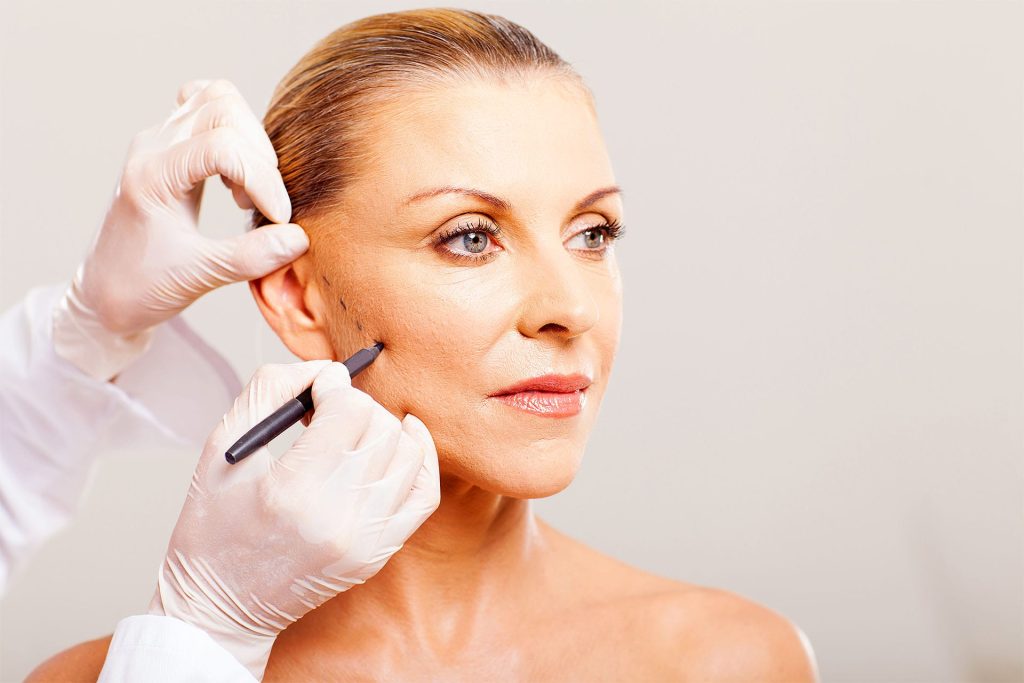
A facelift, or rhytidectomy, is a cosmetic surgery procedure aimed at creating a more youthful appearance for the face by removing excess facial skin and reshaping the lower half of the face. Rhytidectomy can tighten loose, sagging skin around the jawline—commonly referred to as “jowls.” It can also smooth deep wrinkles around the mouth and nose, and remove sagging skin and excess fat under the chin and neck. This procedure can also tighten the underlying tissues and may be combined with surgery to enhance the forehead, cheeks, eyebrows, and eyelids. Facelift surgery is usually performed on an outpatient basis and may involve local anesthesia with sedation or general anesthesia. The procedure can take between 2 to 5 hours, and the patient can typically return home the same day after surgery.
In a traditional facelift, the surgeon makes an incision in front of the ear, extending up into the hairline and also behind the ear into the hair-bearing scalp. The surgeon lifts the skin off the deeper facial muscles and fat, gently pulls the skin upward and backward, and removes the excess skin. Surgeons may also tighten the deeper facial tissues. A large or small incision may be made under the chin to tighten the skin and deeper tissues of the neck—this is known as a neck lift. The incisions are then closed with sutures. A drain may be placed under the skin behind the ear for one or two days to remove excess blood and fluids, and bandages are applied.
Incisions in front of and behind the ears are usually not noticeable. However, there may be some drawbacks.
A facelift does not last forever. Research shows that five and a half years after surgery, 21% of facelifts relapse, but 76% of people still appear younger than before the procedure.
In men, achieving a natural appearance after surgery is more difficult because they have hair in front of the ears or sideburns. If the sideburns are pulled upward and backward, it may look unnatural.
In both men and women, a facelift can cause distortion of the earlobe. If too much skin is removed, the face may appear pulled back or expressionless. To achieve the best results, a person may require additional procedures such as a neck lift, eyelid surgery, liposuction, fat grafting, buccal fat removal, forehead lift, brow lift, chemical or laser resurfacing, and cheek or chin implants.
Before surgery, the cosmetic surgeon reviews the patient’s medical history. These evaluations include:
The doctor and patient will discuss what the surgery involves, where it will be performed, the type of anesthesia to be used, the recovery process, and any possible complications that may arise.
The goals and expectations of the surgery should also be reviewed in relation to the patient’s skin type and bone structure. The aim of a facelift is to create a smoother, more youthful appearance.
Complications from facelift surgery are rare, and cosmetic procedures are generally safe—provided they are performed by a qualified and experienced specialist. However, every surgery carries some risks.
The risks and complications of facelift surgery include:
If the patient notices inflammation, pain, redness, or swelling in the days following surgery, they should seek medical attention, as this may be a sign of a hematoma. If they develop a fever, it may indicate an infection.
However, the following points should be considered before proceeding with the discussion:
Most patients experience some discomfort, but medication can help reduce sensitivity. Bruising and swelling usually peak after 2 days and may persist for several more days. Recovery typically takes about 2 weeks, and strenuous activity can be resumed after 4 weeks. Stitches are usually removed about 5 to 10 days after surgery.
Incisions and bandages should be kept dry, and the patient must follow specific instructions regarding bathing and washing. Adhering to the surgeon’s guidelines is very important, as it speeds up the healing process and ensures the best possible outcome. Numbness and muscle tightness are normal for a period of time. Scars may take up to a year to fade and lighten.
It is worth noting that although genetics play a role, a healthy lifestyle with a balanced diet and adequate exercise can also help maintain the skin’s appearance. Avoiding smoking, limiting alcohol consumption, managing stress, minimizing sun exposure, and reducing contact with pollutants can all contribute to preserving a youthful look. These same habits can help maintain the results of a facelift.

A temple lift, also known as a temporal brow lift, is a plastic surgery procedure performed to elevate the outer part of the eyebrow and tighten the area around the temples.
Although a temple lift is sometimes performed as a standalone procedure, it is more commonly combined with other surgeries such as blepharoplasty (eyelid lift) and facelift. It can be done using smaller incisions that are well hidden within the hairline, resulting in easier recovery and minimal scarring.
A forehead lift is a surgical procedure to correct sagging skin of the forehead, eyebrows, and upper eyelids. It may also improve the appearance of forehead wrinkles and lines between the eyes.
A forehead lift removes or alters the muscles and skin that cause signs of aging such as drooping eyebrows, eyelids, forehead furrows, and frown lines.
This surgery may be performed alone or in combination with other procedures such as a facelift, eyelid surgery, or rhinoplasty. It can be done in the surgeon’s office, an outpatient surgery center, or a hospital. It is usually performed on an outpatient basis without an overnight stay.
During surgery: