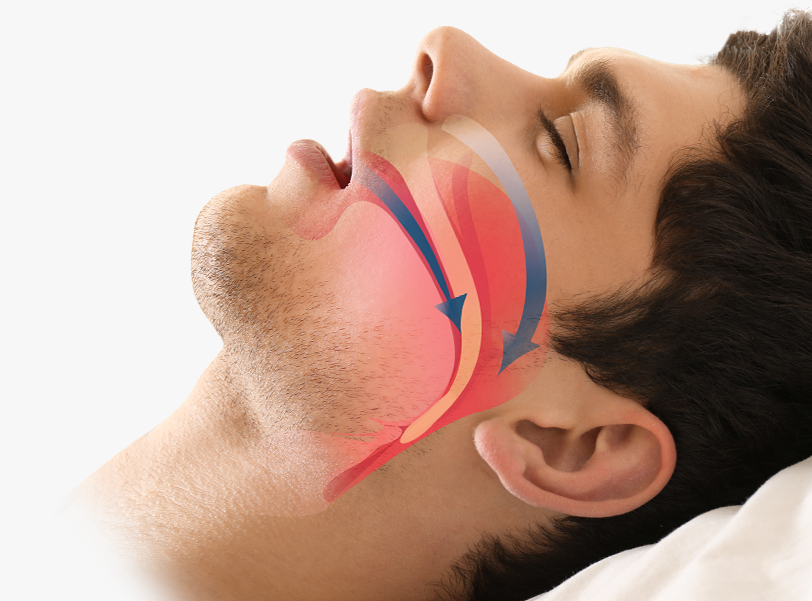
What is Sleep Apnea?
Sleep apnea is a condition in which a person’s breathing stops and starts repeatedly during sleep.
It is a common disorder that can prevent the body from receiving enough oxygen.
There are two types of sleep apnea:
- Central sleep apnea (CSA): Occurs when the brain does not send proper signals to the muscles that control breathing.
It is often caused by underlying conditions that affect the brain.
- Obstructive sleep apnea (OSA): The more common type, in which the airway is periodically blocked due to factors
such as hormonal changes, enlarged tonsils, or obesity.
How is the Cause of Sleep Apnea Diagnosed?
Your doctor can diagnose sleep apnea and determine its type by evaluating breathing activity, blood pressure,
and other factors in a test called polysomnography. During polysomnography, a sleep specialist connects the patient
to equipment that measures breathing and other body functions.
Doctors use the results to rule out other sleep disorders before confirming a diagnosis of sleep apnea.
Read more:
Sinus Surgery
Types of Surgery for Sleep Apnea
Surgery is generally not a suitable option for people with central sleep apnea, and doctors usually recommend it
only for those with mild to moderate obstructive sleep apnea.
However, trusted sources have reported promising results from using a
“fully implantable transvenous phrenic nerve stimulation (TPNS) device” to improve central sleep apnea symptoms.
Research into this treatment is ongoing.
In some cases, doctors can treat obstructive sleep apnea with surgery.
The surgeon must know the exact cause of the condition to choose the most appropriate procedure:
Nasal Surgery
Nasal surgery can help reduce airway obstruction in the nose.
Sleep apnea can occur if there is a blockage in any of the following nasal areas:
- Nasal valve
- Septum
- Turbinates
The most common nasal surgeries for sleep apnea are septoplasty and turbinate reduction.
These outpatient procedures are generally safe.
By correcting a deviated septum or reducing enlarged turbinates, surgeons can help air flow more freely through the nasal passages.
Read more:
Modern Rhinoplasty
Revision Rhinoplasty
Palatal Surgery
For mild cases of sleep apnea, doctors may recommend soft palate surgery, also known as the pillar procedure.
This outpatient method involves placing three small plastic implants into the soft palate tissue.
The implants trigger an inflammatory response that helps stiffen the palate,
making it less likely to vibrate against the throat — which can improve sleep apnea and snoring.
Uvulopalatopharyngoplasty (UPPP)
UPPP is the most common surgical procedure for sleep apnea.
During the surgery, the surgeon removes excess tissue from the throat and soft palate, as well as the tonsils if present,
and then closes the incisions. The treated area, known as the oropharynx, is responsible for most cases of sleep apnea.
This procedure requires an overnight hospital stay and may involve a painful recovery.
Adenoid and/or Tonsil Removal
For children with sleep apnea, doctors often recommend adenoidectomy and tonsillectomy —
the removal of the adenoids and tonsils. Removing these structures can open the airway and improve sleep apnea.
Studies show that children who are not obese and have smaller tonsils may have better recovery
and reduced risk when only the adenoids are removed.
However, if the tonsils are larger, surgery may be more effective when both are removed.
Skeletal Surgery
If abnormalities in the jaw and facial bones are present, doctors may recommend skeletal surgery to correct them.
This procedure involves moving the jaw forward by 10–12 millimeters and securing it with titanium plates.
Compared to other surgeries, this is more complex due to the precise bone cuts and the need for proper dental alignment.
As part of recovery, the patient’s teeth are wired together, and several nights in the hospital are required.
This method has about a 90% success rate, although it is performed only in specialized centers due to its complexity.
Tongue Surgery
Two types of tongue surgery are commonly used:
- Tongue advancement: The surgeon moves the main tongue muscle (genioglossus) forward
by cutting a portion of the jawbone, repositioning it, and securing it with a titanium plate.
While generally effective, this requires an overnight hospital stay and is more invasive than some other procedures.
- Tongue base reduction: This reduces tissue at the base of the tongue,
either through surgical excision (midline glossectomy) or radiofrequency energy.
Excision is more invasive and requires an overnight stay,
while radiofrequency is less invasive but may require multiple sessions.
Both can improve mild sleep apnea in about 60% of cases, though they may not fully cure it.
Tracheostomy
In people with obesity, tracheostomy may provide effective relief from sleep apnea.
This involves creating an opening in the trachea through the neck so that oxygen can bypass the upper airway and flow directly into the lungs.
Doctors sometimes recommend it for patients who have not responded to other treatments.
Risks of Sleep Apnea Surgeries
All surgical procedures carry some degree of risk, which should be discussed with your doctor.
Any surgery requiring general anesthesia poses higher risks because it affects breathing and can make regaining consciousness more difficult.
It may also make breathing more challenging after surgery.
To reduce these risks, patients are carefully monitored throughout the procedure.
General surgical risks include:
- Shock (low blood pressure and increased heart rate)
- Excessive bleeding
- Infections
- Deep vein thrombosis (blood clots)
- Pulmonary embolism
- Breathing difficulties
- Urinary retention
- Allergic reactions to anesthesia
Frequently Asked Questions About Sleep Apnea Surgery
Below are some frequently asked questions about sleep apnea surgery.
For more information, you can contact
Dr. Narges Mikaniki’s clinic through the
Contact Us page.
Does Surgery Cure Sleep Apnea?
For some people, surgery can treat or significantly improve sleep apnea.
While many surgeries have high success rates, no procedure can guarantee a complete cure.
Are There Other Treatments for Sleep Apnea?
The first-line treatment for sleep apnea is Continuous Positive Airway Pressure (CPAP).
This involves wearing a mask over the nose and mouth that is connected to a machine delivering a steady stream of air
to help keep the airways